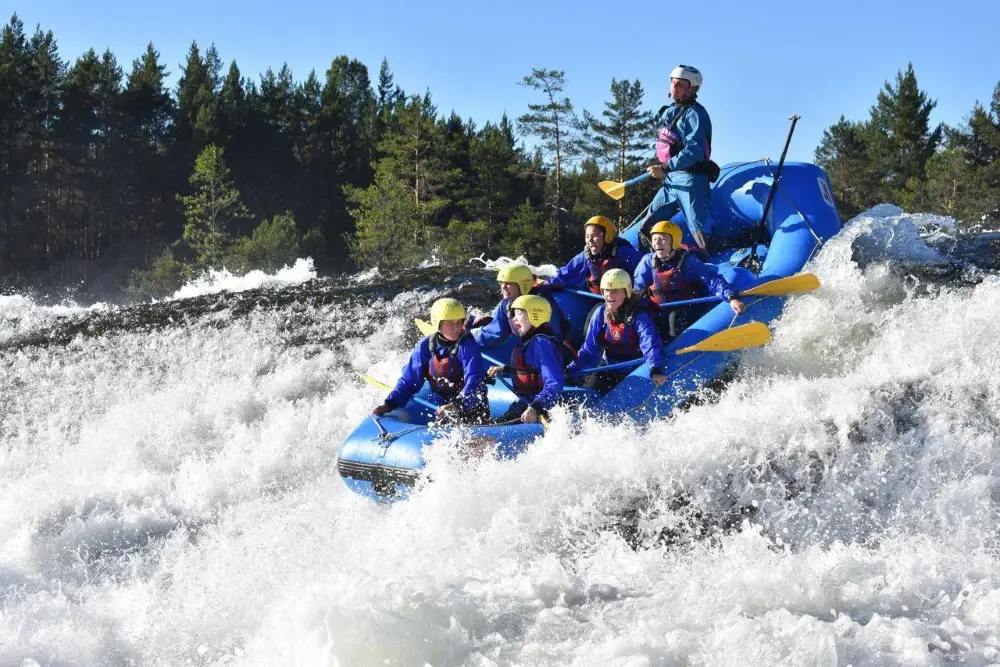
For over a decade, I guided whitewater rafts on various extreme rivers around the world. People fell out of the raft regularly, and their polarised reactions fascinated me.
Some people, if they fell out into the rapids, would hug their life jacket, lie on their back and wait to be rescued. Others would immediately look back to the raft, get on their front and start swimming proactively.
How does this relate to mindset?
IDEA
We all have 'life jackets'. These are habits or responses that help us stay afloat. It might be that time off, so we can recover. It might be that glass of wine or Netflix show to accelerate our relaxation or take our mind off a stressful life. It could be going to the gym, smashing it out to alleviate some of the tension of the day. It might be keeping yourself so busy that you don't need to deal with 'it'. It could even be a mindful meditation practice in an attempt to feel calmer.
There is nothing wrong with using life jackets occasionally to catch a breath. They tend to 'relieve' uncomfortable thoughts and emotions in the short term. The challenge arises when we rely on them too much, and we end up avoiding and not addressing the actual problem.
'Relieving' emphasises the reduction of something unpleasant, while 'satisfying' focuses on taking action in alignment with what's important to us.
What does learning to swim look like? It means taking responsibility for your life and leaning into challenges. It means training yourself mentally, emotionally and physically to be able to, not just survive, but thrive and flow when things get tough. It means being clear on your values. It means holding your ground. It means always learning. It means having that difficult conversation. It means negotiating your boundaries. It means saying yes. It means saying no. It means embracing discomfort and finding freedom on the other side. It means being a little bit braver.
EXPERIMENT
Your experiment:
- Reflect on the activities and behaviours in your life you would consider 'life jackets'. Things that relieve the situation, but don't really address it.
- What thoughts and feelings are you avoiding by engaging in these?
- What would 'learning to swim' look like instead?
- What small action could you take this week to begin?
It's just an experiment. It doesn't need to be right. So long as you learn something.
Big love, Ed